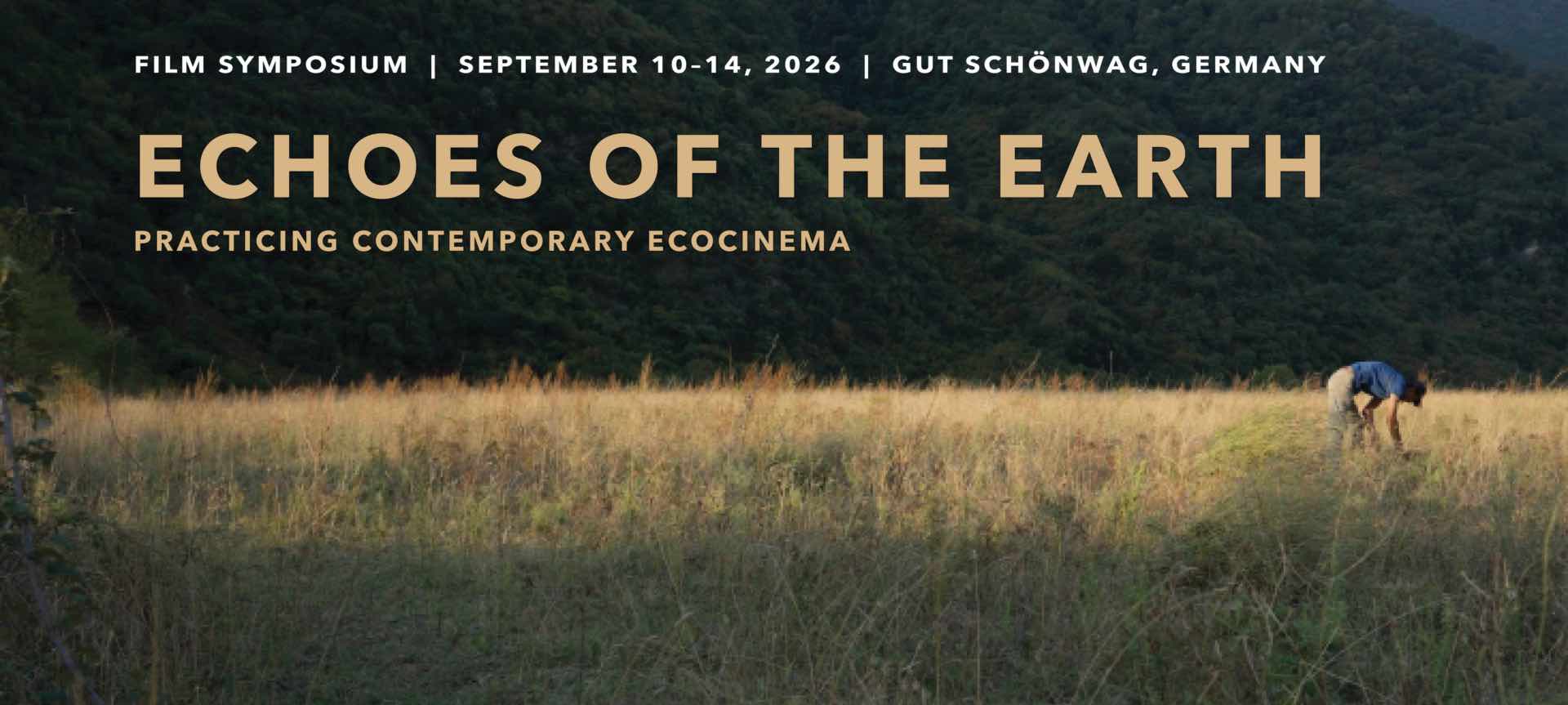
Echoes of the Earth: Practicing Contemporary Ecocinema
Film Symposium / September 10-14, 2026 / Gut Schönwag, Germany
Introduction
Amid intensifying ecological crises and critical engagement with the Anthropocene, ecological cinema has gained both urgency and visibility. More and more documentary films refuse to treat the environment as a mere backdrop to human existence, foregrounding it instead as an active, resistant, and “speaking” presence. Ecocinema is thus evolving into a dynamic interdisciplinary field at the intersection of the arts, anthropology, and environmental research.
With Echoes of the Earth, we are dedicating three days to this developing field. Conceived as both a symposium and a film festival, the event aims to bring together artistic practice, theoretical and methodological reflection, and collective exchange.
The symposium is organized by the Foraging Research Group at the Rachel Carson Center, Ludwig-Maximilians-Universität München, in cooperation with the Studienhaus-Stiftung.
Schedule and Location
Gut Schönwag is located between Munich and the Bavarian Alps in the town of Wessobrunn. Here, we will be accommodated over the course of three full days. This setting offers great opportunities for outdoor sessions and practical activities.
Daytime – Symposium
Approximately 20 invited participants will take part in workshops, talks, presentations, and conversations. Together, the participants will discuss their current academic and audiovisual projects, share methodological approaches, and share knowledge on funding and distribution strategies.
Evening – Film festival
In a nearby cinema, selected films will be screened publicly, followed by in-depth conversations with the filmmakers in attendance.
Please find the full programme here: » PDF «
Film festival
Teaser
Programme and ticket registration
Following daily workshops around the topic of Ecocinema with our 20 participants, we invite for public screenings of their work pieces each evening, namely contemporary documentary films and experimental media art. These independent audiovisual productions oscillate between academia and the arts.
The evening screenings are free of charge and open to everyone.
The works presented explore human–environment relations in times of crisis. Emerging from critical engagements with experimental counter-narratives, Indigenous perspectives, decolonial theory, speculative observations, and more, this film programme brings together very different works that situate themselves within the broad field of ecocinema.
The screenings will be accompanied in person by the filmmakers and media artists, traveling to Peißenberg from India, Australia, the US, the UK, Turkey, Costa Rica, Chile, Indonesia, Belgium, Nigeria, and Germany. Each film will be followed by a Q&A with the artists.
Place: Altes Kino, Peißenberg
Dates: Every evening from 10–13 September
Doors open: 7:30 pm
Screenings start: 8:00 pm
Since we are screening in a small cinema, seats are limited. Please find the registration links for each day in the programme below.
Opening Echoes | Thursday, 10 September | Altes Kino
» Book free tickets for this day «
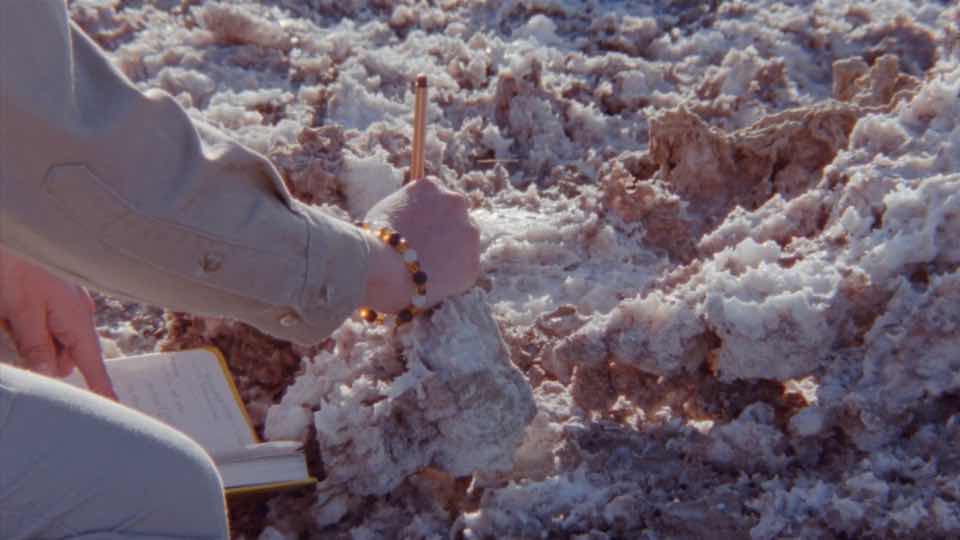
LAS NUBES CAÍDAS, Josefina Buschmann, 16 min
LAS NUBES CAÍDAS is a journey from the Pacific Ocean to the Atacama Desert, tracing the ecologies of digital infrastructures in Chile through the speculative voice of an AI chatbot. Wondering about its digital memory, it speaks with a submarine fiber optic cable, follows a protest against a new data center in Santiago, and listens to the tears of a volcano in cellphone batteries.
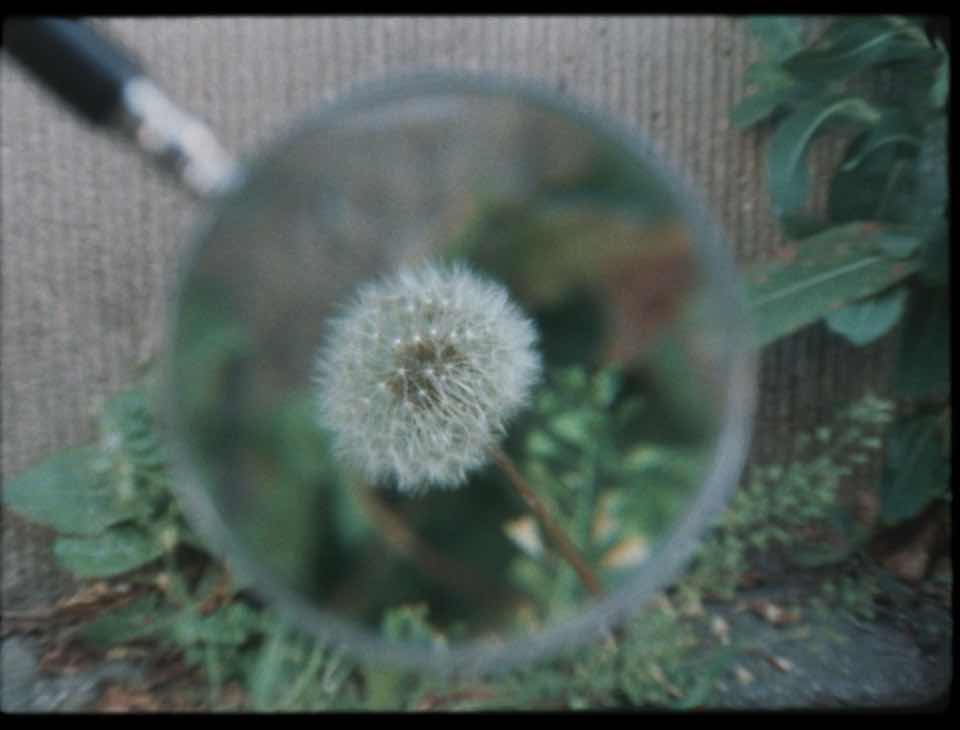
TO LIVE IN THE CRACKS, Milena Desse, 22 min
An old Brussels factory bears witness to an intense industrial period now long gone. Weeds and squatters coexist within these brick and concrete walls. Rhythmically shifting between the political and the poetic, the macroscopic and the microscopic, TO LIVE IN THE CRACKS unfolds by mixing 16mm images, stories from former workers and current occupants, and a sound composition inspired by the building and the plants. A film as a place, a place for dialogue, a place for cohabitation.
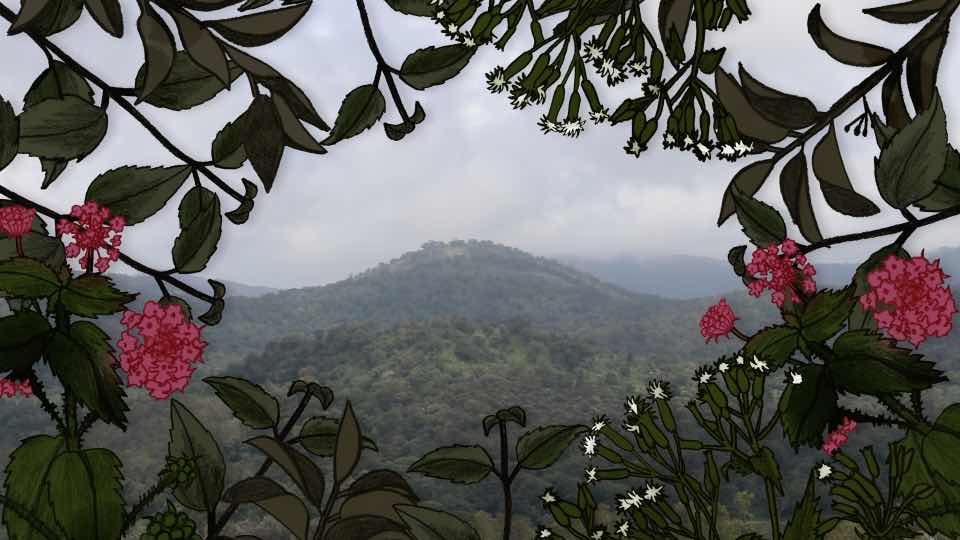
THE LAST BAMBOO, Meera Krishnamurthy, 6 min
Lantana camara, an invasive shrub and its allies Uppilu (Mistletoe), Bilirojiga (Siam Weed), and Karikaddi (Mexican Devil) scheme to take over the Biligiriranga Hills, located in the Western Ghats in India. With Bhumi Tayi (Land) as witness, the film explores the history of the landscape that led to its current state. It foregrounds the Soliga community’s worldview and wisdom, as the disappearance of the native bamboo in the region is visualized by stop-motion sequences, hand-drawn animations, and use of archival images from the region.
HERALDS OF THE MONSOON, Meera Krishnamurthy, 9 min
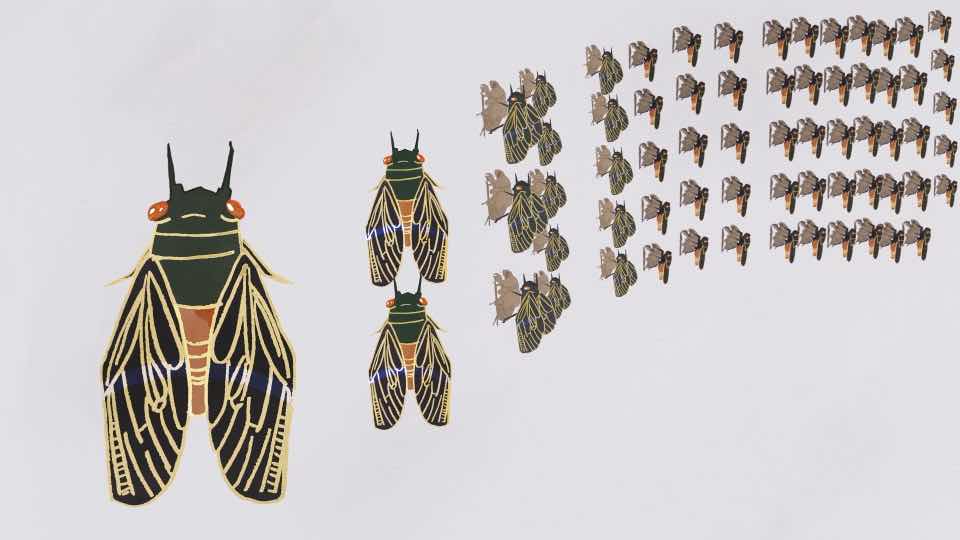
A peaceful dawn in the Biligiriranga Hills in the Western Ghats is broken by the discovery of a dead elephant. A wise old Maththi Tree (Crocodile bark tree) and a visiting Sitte (Blue tiger butterfly) investigate the clues together. The Soliga community’s traditional ecological knowledge unfolds through drawings, time-lapse landscapes, and songs of Soliga elders, while the Sitte, symbolising modern ecological science, is expressed through stop-motion animation of scientific objects. Contrasting both knowledge systems, the film highlights the urgent need for collaboration in the face of climate change.
Echoes Day 2 | Friday, 11 September | Altes Kino
» Book free tickets for this day «

ANARCHAFEMINIST DIVINATIONS, Işıl Karataş, 16 min
ANARCHAFEMINIST DIVINATIONS reworks the Anatolian practice of coffee-ground fortune-telling (fal), traditionally oriented toward heteronormative narratives of love, family, and individual destiny, into a collective and speculative method for imagining shared futures. Combining divination sessions with photochemical processes, the work foregrounds material agency, chance, and entanglement as central research elements. The project aims to create a space for collective interpretation of desirable futures.
EASTERN ANTHEMS, Jean-Jacques Martinod, 78 min
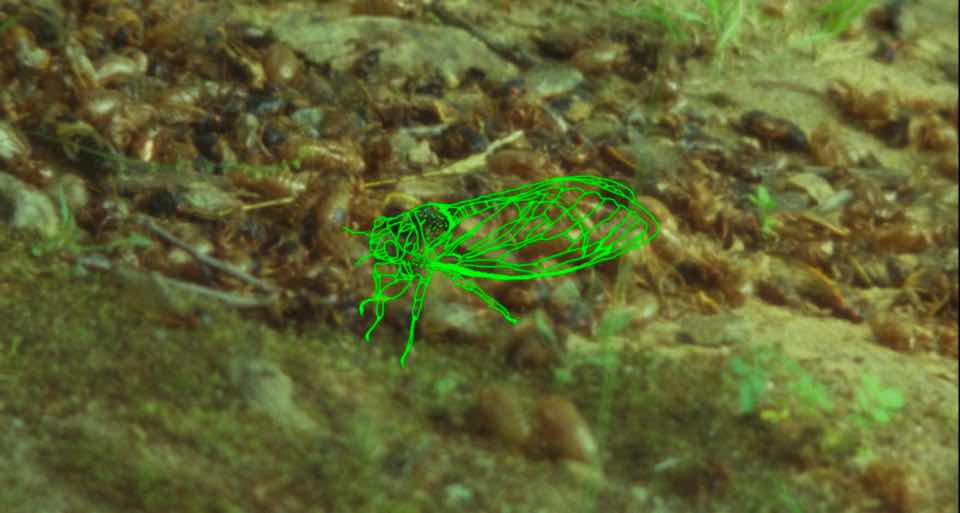
An unfinished film is passed along from one friend to another. The dialog between them is a journey crossed by the swarming of the American Great Eastern Brood X of periodical cicadas that prophetically emerge every 17 years, invoking a reflection on the COVID-19 pandemic and the uncertain future of the United States. Expired film rolls, a broken 16mm camera, and layered media formats shape a hybrid film work composed of a chorus of voices – both human and non-human – on history, nature, and cycles of rebirth. Their brief, hypnotic presence captivates entire communities and becomes both subject and metaphor.
Echoes Day 3 | Saturday, 12 September | Gut Schönwag
» Book free tickets for this day «
ORANGE TO BLUE SKIES, Hedda Askland, 29 min
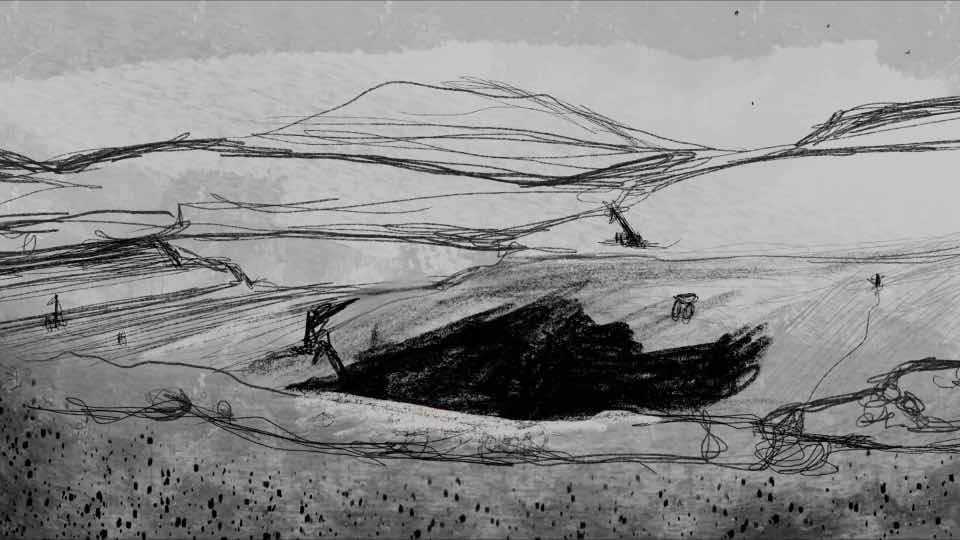
ORANGE TO BLUE SKIES is a collaborative ethnographic film developed with young people from the Hunter Valley in Australia, a Norwegian-Australian anthropologist, and a Belgian filmmaker. Together, they spent almost two years exploring possible futures in the extracted landscape of one of Australia’s largest thermal coal basins, while reflecting on the environmental legacy coal mining will leave behind as the world transitions away from coalfired power.
GESTURES OF CARE, Aryo Danusiri, 65 min
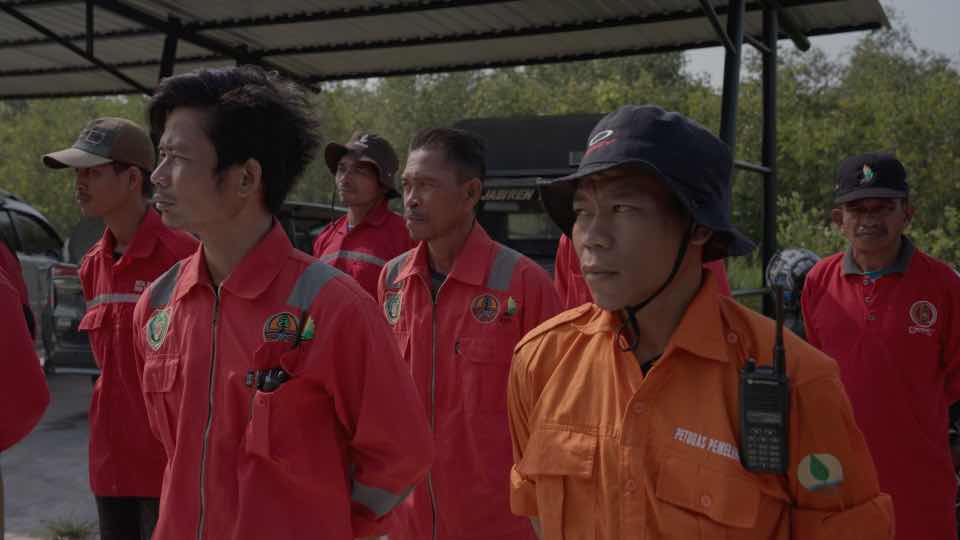
The ecological destruction in Central Kalimantan was once again brought to light by El Niño 2023. This film chronicles the indigenous Dayak people’s fight for survival in the face of devastation. First, Juni has been a part of a government program called a community-based fire brigade for a few years now. The program’s stated goal is to change the Indigenous people’s perception of themselves from being fire starters to fire mitigators. Meanwhile, Ipit and her family are determined to grow padi on their historic plot, which the government converted from peatland into a large food estate.
Closing Echoes | Sunday, 13 September | Altes Kino
» Book free tickets for this day «
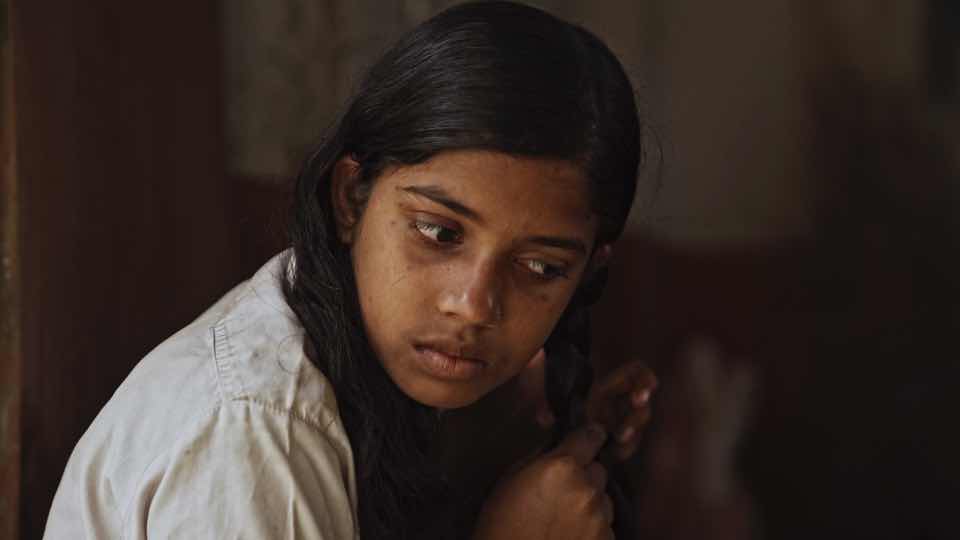
AĀJOOR, Aaryan Chandra Prakash, 122 min
AĀJOOR explores the life of Saloni, a resilient girl from rural Bihar, who challenges societal norms to pursue her education while managing household responsibilities after her mother’s early demise. Her journey intersects with the boys’ newfound obsession with social networking sites. Supported by her father, a vocalist in a Launda Dance team, Saloni faces societal scorn but remains determined to change her destiny. AĀJOOR is a community-driven feature film from rural Bihar, India, created entirely with non-professional actors. It is the very first feature film in the Bajjika language.